Why move here
Amsterdam has a specific claim no other city in this guide can make: it is where same-sex marriage was invented. On April 1, 2001, the Netherlands became the first country in the world to extend marriage equality to same-sex couples, and the first four weddings were conducted in Amsterdam City Hall by Mayor Job Cohen. In 2026, the city marked 25 years of that history with new ceremonies on the same date. That history shapes a culture where queer equality is integrated rather than recently achieved.
The cost is real: Amsterdam is the most expensive city in this guide by a meaningful margin. A mid-range nomad budget runs around $4,000/month, and housing is the main driver — a one-bedroom in a central neighborhood regularly exceeds €2,000. Social housing wait lists run 15+ years, and the private rental market is severely supply-constrained.
What you get for that money: one of the most bikeable cities in the world (80% of residents cycle daily), a population that speaks English as a practical first language, a startup ecosystem of European significance, and a gay scene anchored by Reguliersdwarsstraat that has been running continuously since the 1970s. In 2026, add WorldPride Amsterdam (July 25 – August 8) — the first WorldPride in the city where modern marriage equality began.
Neighborhoods
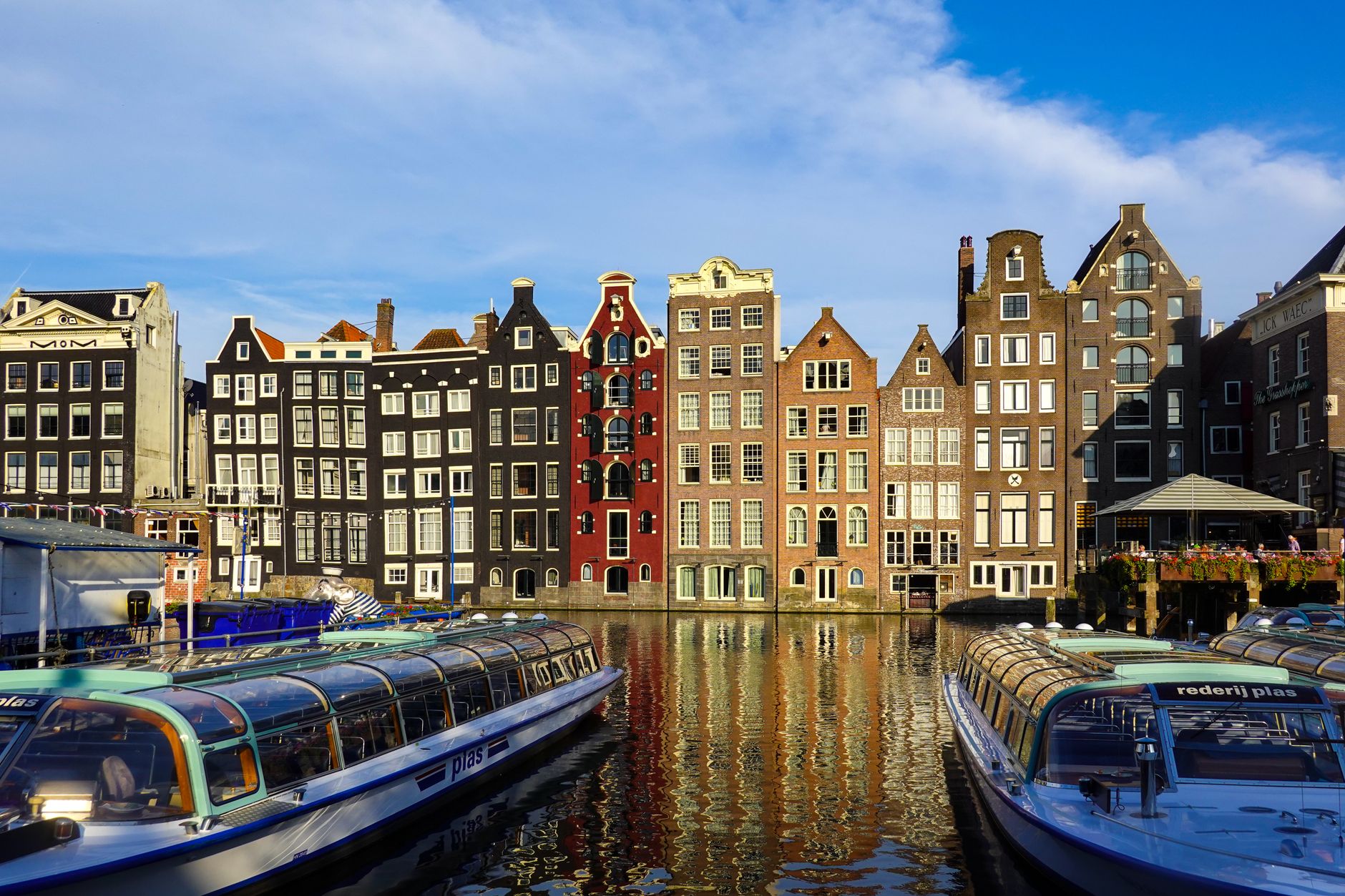
Reguliersdwarsstraat and the canal district. The anchor of Amsterdam’s gay scene is a 200-metre street between Rembrandtplein and Muntplein, with fifteen-plus LGBTQ+ venues walkable end-to-end in under three minutes. The surrounding canal district (Grachtengordel) is expensive but architecturally extraordinary; canal-house one-bedrooms start at €2,200/month and move fast.
Jordaan sits immediately west of the canal ring — gentrified, quiet, excellent food market at Noordermarkt on Saturdays, and within cycling distance of Reguliersdwarsstraat. Rents match the canal district but apartments tend to run slightly larger.
De Pijp is the most practical landing spot for arriving gay nomads. It’s diverse, walkable, served by the Albert Cuyp market (Europe’s largest open-air market), with a strong café culture and rents €200–€400/month below the canal district. One-bedrooms run €1,600–€2,000. The neighborhood has a large expat population and a more relaxed pace than the tourist-heavy canal ring.
Oud-West (between Vondelpark and the canal ring) is similar in character to De Pijp — residential, good coffee, cycling distance from the gay scene. A solid backup if De Pijp availability is tight.
Noord (across the IJ river, reached by free ferry from Centraal Station) is where artists and studios have been colonizing for a decade — cheaper rents (€1,200–€1,500 for a one-bedroom), genuinely different from the center. Worth considering if you’re staying six months or more and want to live among Dutch residents rather than fellow expats.
Best time to move/visit
Moving: September–October or March–April. Amsterdam housing is competitive year-round, but the summer tourist season pushes short-term rental prices higher and tightens availability. Arriving in autumn or spring gives you a more stable market and the city at a functional pace.
Visiting: May through September covers the reliable weather window. The canal ring and Vondelpark are at their best in late May and June — tulip season has just passed, and July’s tourist saturation hasn’t hit yet.
Pride: WorldPride Amsterdam 2026 runs July 25 to August 8. The Canal Parade — boats and floats sailing the full canal ring — takes place Saturday August 1 from noon to 6pm, with 500,000+ spectators expected on the canal banks. In a non-WorldPride year, Amsterdam Pride falls on the first Saturday of August; in 2026 it’s absorbed into the two-week program spread across dozens of venues citywide.
Safety and acceptance
Amsterdam is a safe city. Violent crime is low by European standards; the main problems are bike theft (endemic — always double-lock) and pickpocketing in the tourist center (Centraal Station, the Red Light District, Leidseplein). The Red Light District can be chaotic on weekend nights but is not dangerous for residents.
For gay travelers and residents, Amsterdam is among the most straightforwardly safe cities in the world. A 2023 Eurobarometer poll showed 94% of Dutch people support same-sex marriage across Europe. Reguliersdwarsstraat and the canal district are fully open spaces for gay couples. The Homomonument at Westermarkt is the national memorial to LGBTQ+ persecution — an actively maintained civic landmark, not a historical footnote.
One persistent friction point: Amsterdam sees occasional harassment of gay men at night near Rembrandtplein, particularly late on weekends. Rare but documented. The pattern implicates tourists, not the Dutch public.
Legal status
Cost of living
Amsterdam is the most expensive city in this guide. The housing market is the main driver; everything else (food, transport, entertainment) is expensive relative to Southern Europe but not dramatically more than other Northern European capitals.
| Expense | USD / mo |
|---|---|
| Rent — 1BR apartment, central (canal district / De Pijp) | $2,100 |
| Groceries | $370 |
| Eating out (3–4×/week, local restaurants) | $360 |
| Coworking space (monthly membership) | $200 |
| Transport (GVB monthly pass or day cycling) | $115 |
| Utilities + internet | $175 |
| Health insurance (mandatory Dutch basic insurance or expat cover) | $200 |
| Phone SIM + data | $30 |
| Entertainment, leisure, nightlife | $350 |
| Bike (purchase amortized + maintenance/repairs) | $100 |
| Total | $4,000 |
If you can find accommodation in De Pijp or Noord rather than the canal district, rent drops to €1,600–€1,800 and the overall budget comes in closer to $3,600. The premium of the canal district is real estate, not quality of life. Numbeo Amsterdam data, June 2026.
Community and dating
Amsterdam’s gay scene is the most historically continuous in Europe — community-rooted and resident-driven, not tourist-dependent.
Reguliersdwarsstraat is the spine. The 200-metre street runs bar-to-bar in summer with open facades facing the pavement. Taboo Bar, Soho Amsterdam, and Prik (just off the main strip at Spuistraat) are the consistent long-runners. Gaycafé Montmartre reopened in February 2026 at the western end of the street. BLEND and BLEND XL (the latter in the former Bar ARC space) fill the café-bar gap that opened mid-decade. Club Church (Kerkstraat) handles the club and fetish nights. Nightlife venues change — check current listings on apps, local LGBTQ guides, and the venues’ own socials before you go.
Leather and fetish community: Amsterdam’s leather scene is smaller than it was pre-2015 — Argos, the Eagle, and other Warmoesstraat institutions have closed over the past decade — but it’s not gone. Cuckoo’s Nest (Nieuwezijds Kolk 6), open since 1984 and home to one of Europe’s larger darkrooms, remains the main cruise bar. Club Church runs the fetish party calendar, and Amsterdam Leather & Fetish Pride draws an international crowd each autumn.
Homomonument: The pink-triangle memorial at Westermarkt is where the community gathers on Remembrance Day and during Pride — a 10-minute bike ride from Reguliersdwarsstraat and integrated into Amsterdam civic life in a way that few queer monuments in any city manage.
Dating apps: Grindr and Scruff have large, diverse Amsterdam userbases reflecting the city’s international character. Hornet is strong in the Dutch community. On Reguliersdwarsstraat, location-based search returns results within meters.
Settling in — life as a gay expat
The first 90 days in Amsterdam hit one wall harder than any other: housing. The private rental market is among the tightest in Europe, and foreign arrivals compete with locals for a shrinking pool of legal rentals. Good apartments in De Pijp or Oud-West go within 24–48 hours; the Facebook group “Amsterdam Expats Housing” and Funda move faster than any agency. Most landlords want proof of income at 3× monthly rent — remote workers with foreign employment contracts should have a full financial package ready before they start viewing. Renting as a same-sex couple is legally a non-issue; individual landlord bias is rare but not impossible.
Getting legal starts with a BSN (citizen service number), which requires a registered Dutch address, which requires a BSN — the circular dependency is a known Amsterdam headache. The practical route is to arrive in furnished housing (Zoku, Outsite, or a private furnished rental), register at that address at your local municipality, then open a bank account (Bunq works well for foreign nationals) and apply for your residence permit once you have the address.
The gay expat community in Amsterdam is large and well-networked, but it skews towards people who arrived for tech or finance jobs rather than digital nomads. Meeting queer locals takes longer than meeting queer expats — the Dutch are genuinely friendly but warm up more slowly than southern Europeans. Reguliersdwarsstraat regulars who show up consistently become familiar faces; cold-contact introductions at bars are less the norm here.
Dating in Amsterdam leans serious faster than you might expect. The city has a large, stable gay population that has put down roots, and the social scene reflects that — people are looking for more than a three-month fling. Apps work well for the expat layer; getting into the Dutch social circle takes effort and rewards some Dutch language use, even at a basic level.
As a couple, Amsterdam is straightforwardly comfortable. Hand-holding in Reguliersdwarsstraat is completely unremarkable; the same is true in Jordaan, De Pijp, and most of the central city. The city’s out-at-work culture is strong in tech and creative industries; more traditional Dutch corporate sectors are fine but less vocal about it.
The thing newcomers most consistently underestimate: the cost of the housing search itself. Budget one to three months in a furnished rental at €1,800–€2,500/month before you find a permanent place. Factor that into arrival finances.
Work and connectivity
The Netherlands has among the fastest residential internet in Europe; fibre is standard in new builds and most renovated apartments. English works as a full operating language — you can function indefinitely here without learning Dutch, though picking up the basics pays social dividends.
Coworking: Zoku Amsterdam (Weesperstraat) is the most consistently praised option for international nomads — rooftop coworking, good community events, day passes and memberships. StartDock (Nieuwezijds Voorburgwal and Herengracht) is the main alternative with a community-oriented setup. WeWork has multiple locations. Day passes run from €24; monthly hot-desks from €200–€250. B.Amsterdam (Reykjavikplein), the former IBM campus in Westpoort, suits you if you want a startup-ecosystem environment rather than a traditional coworking seat.
Cafes: Amsterdam café culture is good but less laptop-centric than Berlin or Lisbon — many cafes optimize for conversation over solo work. Espressofabriek (multiple locations), Lot Sixty One (Jordaan), and Scandinavian Embassy (De Pijp) are reliable for morning sessions with power outlets.
For European travel connectivity: eSIM 7G covers 150+ countries and keeps your original number live for bank 2FA — use code 524JQTTA for 15% off.
Visa and how to move
Short stays: EU citizens have full freedom of movement. US, UK, Canada, Australia, and most Western passport holders enter the Netherlands visa-free for up to 90 days within any 180-day Schengen period.
Netherlands Self-Employed Residence Permit: There is no dedicated digital nomad visa. The long-stay path for non-EU self-employed people is the Self-Employed Residence Permit issued by the IND (Immigratie- en Naturalisatiedienst):
- Most non-EU nationalities: points-based RVO assessment evaluating your business plan (max 300 points), personal experience, and Dutch economic interest
- Application fee: €1,446 for the combined MVV + residence permit (2026 rate)
- Processing: 90 days for most applications
US citizens — DAFT pathway: Americans qualify for the Dutch American Friendship Treaty route:
- €4,500 in starting capital in a business bank account
- Valid US passport
- No points test — simplified RVO assessment
- Register as a ZZP entrepreneur via the Dutch Chamber of Commerce (KVK)
- Permit valid 2 years, renewable to 5
The BSN problem: Both routes require a registered Dutch address to apply, a BSN to secure housing, and an address to get a BSN. The circular dependency is well-documented. The workaround: arrive on tourist entry, stay in furnished housing (Zoku, Outsite Amsterdam, or a private furnished rental), register at that address at your local municipality, get your BSN, open a bank account (Bunq or Revolut NL work well), then apply for the permit.
For international transfers during setup: open a Wise account for free.