Why move here
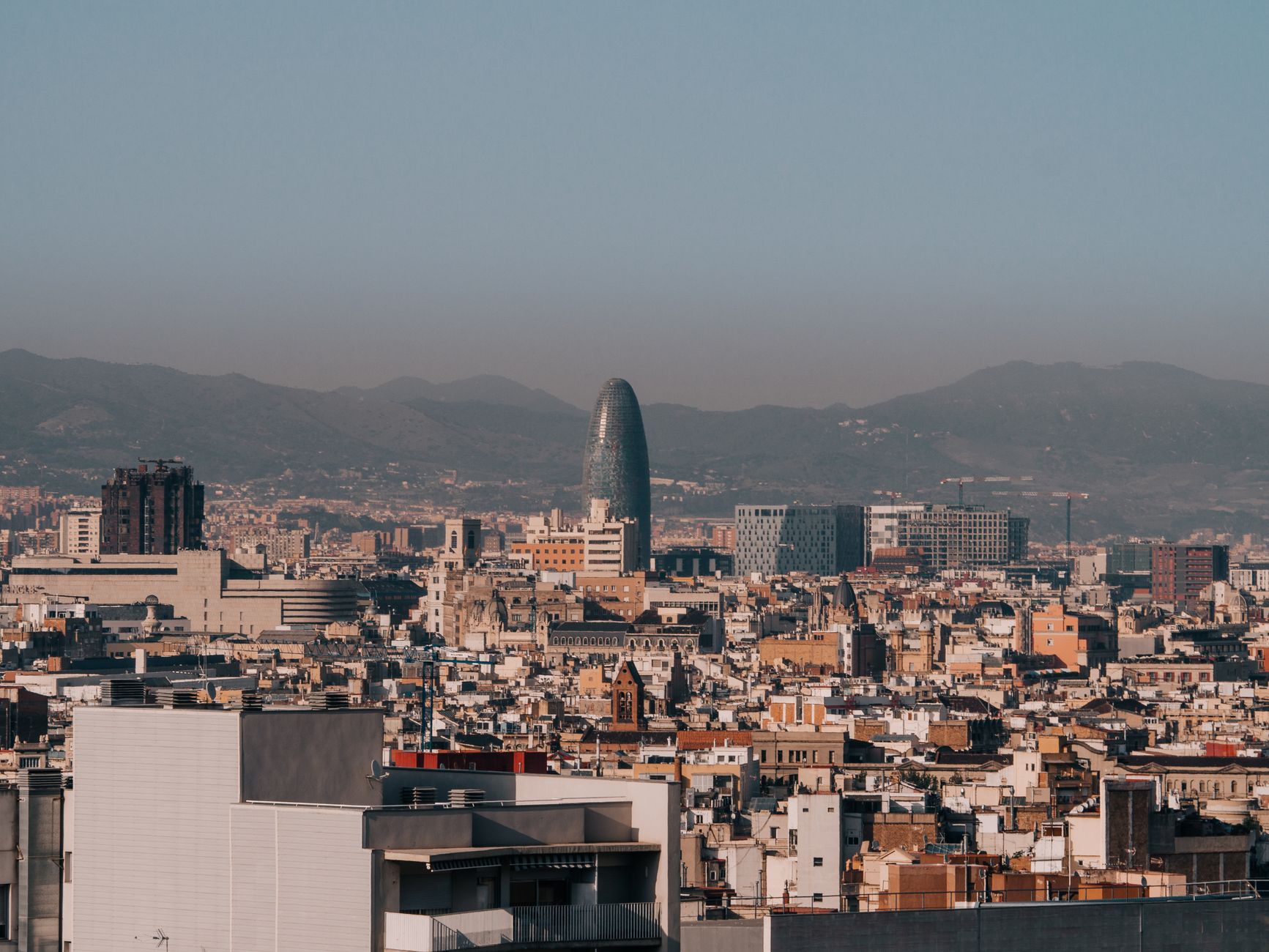
Barcelona has Gaudí’s skyline, the Mediterranean 20 minutes from anywhere, and the Eixample grid with the widest sidewalks in Europe. For gay men and women considering relocation, the relevant facts are these: Spain’s same-sex marriage law dates to 2005, the Gaixample has been operating as a gay district since the late 1980s, and the city treats queer visibility as background rather than event.
What it requires in return is money. Barcelona is the most expensive Iberian city in this guide — 10–15% above Madrid, meaningfully above Porto, though still below Amsterdam. Short-term furnished rentals in central neighborhoods start around €2,000/month; the housing market is tight from decades of under-investment in rental stock and sustained tourist pressure. Budget $3,200/month for a realistic mid-range nomad life.
One honest safety footnote before you arrive: Barcelona has the highest pickpocketing rate in Western Europe by some measures. La Rambla, the Gothic Quarter, and El Born’s main drag are genuinely predatory for bag-snatchers. The neighborhoods where you’d actually live are safer — but know this going in.
Neighborhoods
Gaixample — the portmanteau of “gay” and “Eixample” — is the three-block grid in the left Eixample bounded by Carrer Balmes, Gran Via, Carrer Urgell, and Carrer Aragó. Around 50 LGBTQ+ bars, clubs, and saunas sit within this walkable rectangle. Rents for a one-bedroom run €1,600–€2,100 ($1,750–$2,300); the market moves fast and apartments are often unfurnished.
Eixample Dreta (right side of the Eixample) is slightly farther from the Gaixample but quieter, with better grocery options and still within 15 minutes’ walk. Rent runs €100–€200/month lower for comparable apartments.
Gràcia, the neighborhood above the Eixample, has smaller plazas, independent shops, and strong local character. It’s 20 minutes’ walk from the Gaixample or one Metro stop. Rents are comparable to the right Eixample.
El Born and Sant Pere are expensive for a long stay and not particularly gay-oriented. Worth knowing for design and food, but the Gaixample is the anchor for most queer residents.
Poble Sec, on the southern slope of Montjuïc, cuts rent by €300–€400/month with a 15-minute Metro commute. The arts scene here has improved substantially since 2022.
Best time to move/visit
Moving: October through November is the practical window. Summer tourist pressure has cleared, the housing market normalizes, and the weather holds at 20–25°C. Avoid July and August — the city is overwhelmed, rents spike, and finding a decent apartment at a fair price in a 90-day stint is genuinely difficult.
Visiting: May–June and September–October give you Barcelona at its best. The sea is warm enough to swim from mid-June through October. July and August are hot, crowded, and expensive.
Pride: Barcelona Pride 2026 runs June 26 to July 18, with the Pride Village at Plaça Universitat on July 17–18 and the main parade on Saturday July 18. Circuit Festival follows in early August. Barcelona Pride is explicitly large-scale and international — more festival than neighborhood celebration.
Safety and acceptance
The petty crime reputation is earned. Pickpocketing on La Rambla, in the Gothic Quarter, and on crowded Metro lines (especially L1 and L3 in tourist sections) is endemic. Use a crossbody bag, keep your phone off café tables, and stay alert at Metro stations. This is a property crime problem in specific zones, not a violent crime problem.
The neighborhoods where you’d actually live — Gaixample, Gràcia, Poble Sec — have normal street safety. La Rambla and the Gothic Quarter are where the problem concentrates.
Gay couples attract no meaningful reaction in the Gaixample and throughout central Barcelona. Catalonia has historically been progressive on civil rights; the regional government has additional LGBTQ+ protections beyond the national baseline.
Legal status
Cost of living
Barcelona is the most expensive Iberian city in this guide — pricier than Madrid, though still below Amsterdam. Short-term furnished rentals are the biggest driver — if you’re arriving without an unfurnished long-term lease already signed, expect to pay €1,800–€2,200 for a one-bedroom in the Gaixample area. The numbers below assume a month-to-month furnished rental at the lower end of the current market.
| Expense | USD / mo |
|---|---|
| Rent — 1BR apartment, central (Gaixample / Eixample) | $1,850 |
| Groceries | $290 |
| Eating out (3–4×/week, local restaurants) | $290 |
| Coworking space (monthly membership) | $175 |
| Transport (Metro T-Casual 10-trip card or monthly) | $60 |
| Utilities + internet (often included in furnished rentals) | $110 |
| Health insurance (SafetyWing or private) | $120 |
| Phone SIM + data | $25 |
| Entertainment, leisure, nightlife | $280 |
| Total | $3,200 |
If you can secure an unfurnished long-term lease, rent drops to €1,400–€1,700 and utilities split out differently. The furnished short-term market is what catches most arriving nomads. Numbeo Barcelona data, June 2026.
Community and dating
The Gaixample has around 50 LGBTQ+ venues in a walkable rectangle and has operated continuously since the late 1980s. The scene is large, well-differentiated, with a genuinely local crowd alongside the international mix.
Bars and clubs: Nights run in phases — bars from 11pm, clubs from 1–2am. Punto BCN (Carrer de Muntaner 65) and La Chapelle (Carrer Muntaner) are verified open as of 2026: Punto BCN does bar service from 6pm and transitions into a fuller scene after 11pm; La Chapelle is the more iconic of the two, reliable and mid-energy, good for meeting people without circuit pressure. Arena Madre is the largest club in the area and draws a mixed international crowd. Venue lineups and nights change — check current listings on apps, local LGBTQ guides, and the venues’ own socials before going.
Circuit Festival: Barcelona’s international circuit event in August draws a large international crowd that significantly expands the local gay community for 10 days.
Dating apps: Grindr, Scruff, and Hornet all have large userbases. The city’s international character means the app mix is genuinely diverse. Scruff draws more of the international nomad crowd; Grindr has the largest volume.
Settling in — life as a gay expat
The first 90 days in Barcelona are harder than they look on a housing website. The rental market is chronically undersupplied, and competition for a decent unfurnished apartment in the Gaixample or Gràcia is fierce — listings go in hours. Most arriving nomads land in furnished short-term rentals at €1,800–€2,200/month while they search. The practical sequence: get your NIE (at the Oficina de Extranjería or via a gestor for €100–200), register your padró (local address registration), then open a bank account. Renting as a same-sex couple is legally unremarkable in Barcelona — this is Catalonia — but individual landlords vary, and the competition means you’ll be competing with families and long-term residents. Lead with your income proof.
Making friends requires effort. Barcelona has a large English-speaking expat community, which makes it easy to build a social life without Catalan or Spanish — and also makes it easy to stay entirely within that bubble. The local Catalan queer community has its own networks, somewhat separate from the Gaixample tourist-facing scene. Getting into it takes language; even functional Spanish opens more doors than English.
As a couple, central Barcelona is genuinely comfortable. Hand-holding in the Gaixample, Gràcia, and Eixample draws no reaction. The outer neighborhoods and suburban commuter belt are more conservative, though incidents are rare.
Dating beyond apps is possible here but complicated by transience. Barcelona attracts a lot of people on 3–6 month stays — remote workers, students, tourists extended — and the social fabric turns over fast. If you’re looking for something more lasting, the locals-focused social layer (which means getting comfortable in Spanish or Catalan) is where it lives.
The thing that surprises most people: cost fatigue. Barcelona starts to feel expensive around month three once the novelty wears off and you’re tracking what you’re spending on rent, eating out, and nightlife. Budget honestly before you commit to a longer stay.
Work and connectivity
Fibre broadband is standard in central apartments. The city has built a substantial startup and digital nomad community since 2019, which means coworking, legal advice, and expat support networks are more developed than in comparable-sized European cities.
Coworking: Aticco (Carrer de Pallars, 85) has a strong community of remote workers and startup founders. The Work Place (Carrer Diputació, near Gaixample), Regus, and WeWork have multiple locations. Day passes run €15–25; monthly hot-desks start around €150–€200.
Cafes: The Eixample has solid laptop-friendly cafes. Federal Café (Carrer del Parlament, Poble Sec), Nomad Coffee Lab, and the specialty spots on Carrer Enric Granados all expect laptop users in the morning.
For EU and international travel coverage, an eSIM covers the local-SIM headache: eSIM 7G covers 150+ countries and keeps your original number live for bank 2FA — use code 524JQTTA for 15% off.
Visa and how to move
Short stays: EU, UK, US, Canadian, Australian, and most Western passport holders enter Spain visa-free for up to 90 days within any 180-day Schengen period.
Spain Digital Nomad Visa: Spain’s Digital Nomad Visa applies equally to Barcelona and Madrid. As of 2026:
- Monthly income of at least €2,849 (200% of Spain’s SMI, updated March 2026)
- University degree or 3+ years of professional experience in your field
- Proof of working for your employer or clients for at least 3 months prior to application
- Employer or client has been in operation for at least 1 year
- Clean criminal record
- Health insurance valid in Spain
Valid for 1 year from a consulate application, 3 years if applied from within Spain, renewable up to 5 years total.
Finding accommodation: Idealista and Fotocasa are the main platforms. Habitaclia covers Catalan-specific listings. The Facebook group “Barcelona Expats Housing” moves fast — set up email alerts rather than refreshing manually.
For international transfers during the setup period: open a Wise account for free.