Why move here
Lisbon earns its reputation on two counts that actually matter: the legal framework is airtight (same-sex marriage since 2010, full anti-discrimination coverage, adoption rights), and day-to-day acceptance is genuine rather than performative. You can hold hands in Príncipe Real on a Tuesday without attracting a second glance.
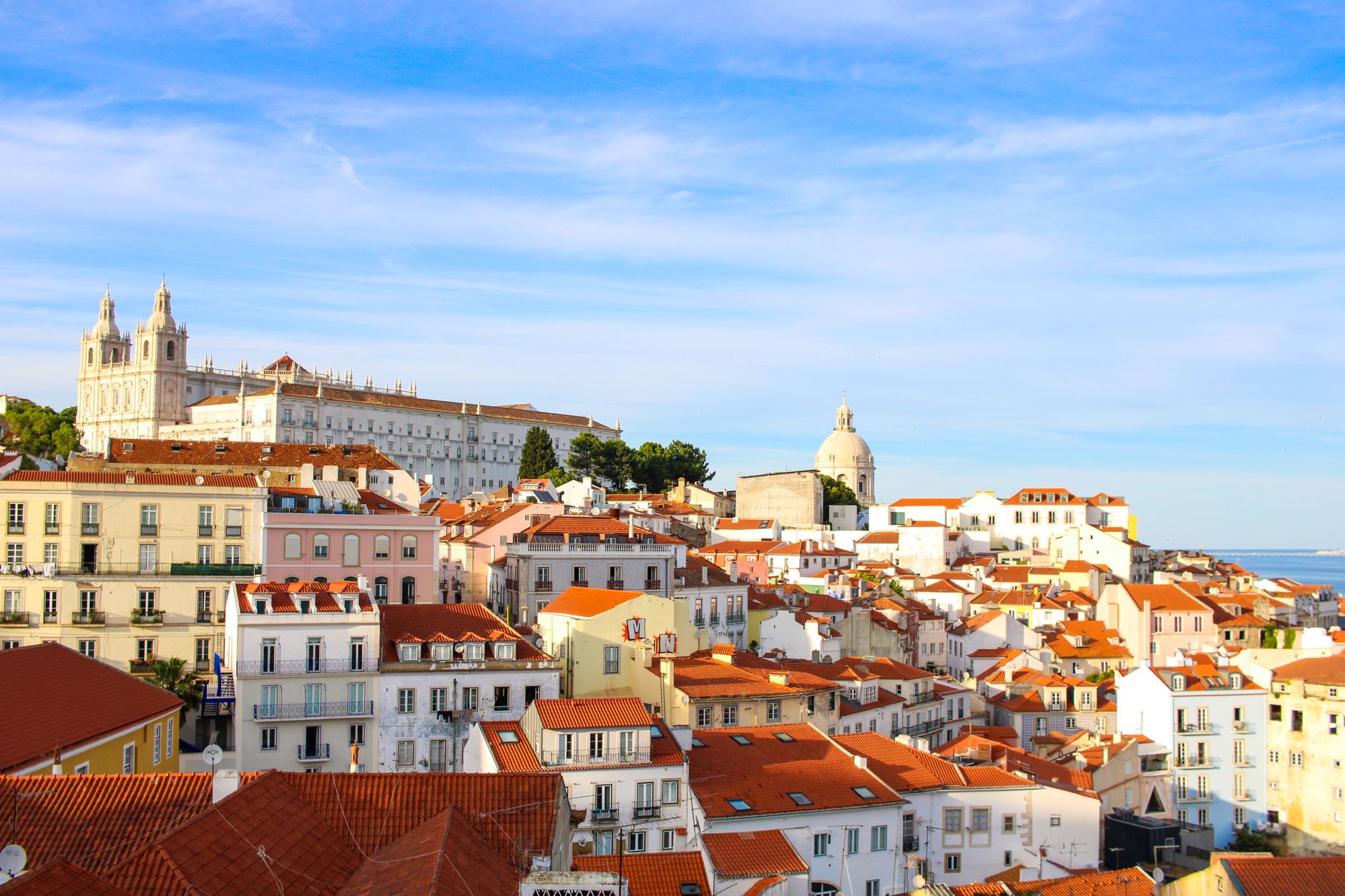
Beyond acceptance, the city has a scale that works in your favor. Lisbon’s hills and neighborhoods feel human-sized. You can walk from a morning coworking session in Intendente to lunch in Mouraria to an afternoon rooftop in Bairro Alto without losing half your day to transit. The light from March through October is extraordinary — photographers and architects come specifically for it.
The trade-off is cost. Lisbon is no longer the cheap southern European escape it was in 2018. A realistic mid-range nomad budget runs around $2,800/month. That’s not Bangkok, but it’s well below London or Amsterdam for a comparable quality of life, and the D8 Digital Nomad Visa gives you a legal path to stay as long as you like.
Neighborhoods
Príncipe Real is the anchor of Lisbon’s gay scene — one of the few gayborhoods in Europe that manages to be genuinely gay without feeling like a theme park. The streets around Praça das Flores and Rua Dom Pedro V hold the highest concentration of gay bars and LGBTQ-owned businesses outside of Bairro Alto. Apartments here are expensive (expect €1,600+ for a one-bedroom), but you’re within ten minutes’ walk of almost everything.
Bairro Alto runs adjacent to Príncipe Real and is where the nightlife concentrates. The streets between Rua da Atalaia and Rua do Diário de Notícias come alive from 10 pm. It’s loud and crowded on weekends; if you need quiet, look elsewhere for an apartment.
Mouraria sits at the foot of the Alfama castle and has become the most multicultural neighborhood in the city. Rents run lower than Príncipe Real, the food scene is excellent, and the gay scene is only a 15-minute walk. Many long-term expats end up here once they tire of paying Príncipe Real premiums.
Intendente and Anjos (the lower stretch of Mouraria, extending northeast) are where younger creatives and recent arrivals live. Coworking spaces have opened here, rents are still reasonable by Lisbon standards, and transit links are solid.
Belém and Alcântara on the waterfront suit remote workers who care less about walking to nightlife. Both have cafes, good cycling infrastructure along the riverfront, and slightly lower rents than the historic center.
Best time to move/visit
Moving: September and October are the most practical window. The heat has dropped to the mid-20s Celsius, apartments that turned over for summer are back on the market, and you’re not competing with July–August demand spikes. Spring (March–May) is the second-best option.
Visiting: May through October gives you reliable sun. July and August are peak tourist season — the city is crowded, accommodation prices jump 30–40%, and Príncipe Real fills with visitors. If you’re scouting for a longer stay, come in April or October when the city is running at normal speed and you can evaluate coworking spaces and neighborhoods without fighting the crowds.
Pride: Lisbon Pride (Marcha do Orgulho) runs in June, typically the last Saturday of the month. It draws hundreds of thousands of people and the city is unambiguously celebratory — government buildings fly rainbow flags, the waterfront hosts stages. Arraial Lisboa is the queer-run festival counterpart organized by ILGA Portugal, running across the same week with its main outdoor stage at Terreiro do Paço. The two events together make Pride week the most concentrated period of community life in the city.
Safety and acceptance
Lisbon has low street crime. Portugal ranks among the top ten safest countries on the Global Peace Index, and Lisbon scores well on violent crime. Petty theft — bag-snatching on trams and in crowded tourist spots like Alfama — is the main hazard, not violence.
Acceptance of gay couples tracks with what you’d expect from a Western European capital. Príncipe Real and Bairro Alto are openly gay spaces. Central neighborhoods — Chiado, Intendente, Mouraria — are unreservedly welcoming. The outer residential areas (Benfica, Odivelas, the eastern suburbs) are more conservative and less used to visible queer couples, but incidents are rare and reports of harassment are uncommon.
One area of caution: the Metro late at night, particularly after 1 am, can attract the occasional drunk who makes remarks. This is more nuisance than threat and is consistent with any large European city. Take an Uber or Bolt after midnight if you’re dressed conspicuously.
Legal status
Cost of living
Lisbon has gotten expensive. The numbers below reflect a realistic mid-range nomad setup — central one-bedroom, coworking membership, eating out three to four times a week. You can spend less by living farther out and cooking more, or significantly more in Príncipe Real with a premium apartment and nightly bar tabs.
| Expense | USD / mo |
|---|---|
| Rent — 1BR apartment, central (Príncipe Real / Bairro Alto / Chiado) | $1,550 |
| Groceries | $300 |
| Eating out (3–4×/week, local restaurants) | $280 |
| Coworking space (monthly membership) | $165 |
| Transport (Metro pass + occasional Uber/Bolt) | $85 |
| Utilities + internet (fibre broadband included in most rentals) | $80 |
| Health insurance (SafetyWing or private) | $120 |
| Phone SIM + data | $25 |
| Entertainment, leisure, nightlife | $195 |
| Total | $2,800 |
Rent is the biggest variable. A one-bedroom in Mouraria or Intendente runs €1,100–€1,300 ($1,200–$1,425), compared to €1,500–€1,800 ($1,640–$1,970) in Príncipe Real. Numbeo Lisbon data, June 2026.
Community and dating
Príncipe Real has been a gay neighborhood since the 1990s, and the scene has diversified rather than contracted — it runs on a resident crowd, not tourist traffic.
Bars and clubs: Trumps (Rua da Imprensa Nacional) is Lisbon’s long-running gay club and still the main dance venue — two floors, drag shows, open Thursday through Sunday until 6 am. Purex (Rua das Salgadeiras, Bairro Alto) is the more underground option, known for its orange doors and a mixed but heavily queer crowd from Wednesday onward. Bar 106 (Rua de São Marçal, Príncipe Real) is the oldest continuously running gay bar in the city, open daily from 7:30 pm — low-key drinks on weeknights, DJ nights on weekends. Nightlife venues change fast; before you go, check current listings on apps, local LGBTQ guides, and the venues’ own socials.
Community spaces: Centro LGBTI de Lisboa (contact via ILGA Portugal at ilga-portugal.pt) runs events, support groups, and resources for newly arrived expats. For the English-speaking expat community, Internations Lisbon has an active LGBT+ chapter with monthly meetups.
Dating apps: Grindr, Scruff, and Hornet all have active userbases in Lisbon. Hornet has a strong presence in the local Portuguese community. Scruff draws more of the expat and bear crowd. Location-based search works well within 5 km of Príncipe Real.
Social mix: Lisbon pulls in a lot of gay expats — from Brazil, Spain, the UK, and Germany — alongside a large Portuguese crowd at the same venues. You’ll meet people who arrived six months ago and people who have been there ten years, and both groups are generally accessible to newcomers.
Settling in — life as a gay expat
The first 90 days are more friction than people expect. Housing moves fast: good apartments in Príncipe Real and Mouraria get taken within days, usually through Facebook groups (“Lisbon Expats Housing”) and Idealista rather than formal agencies. Renting as a same-sex couple is a non-issue legally, but individual landlords vary — the practical workaround is to apply jointly and lead with financial stability, not identity. Getting a NIF (tax number) is the unlock for everything else: bank account, lease, mobile contract. You can get one at a tax office without being a resident, and a lawyer or gestor can do it remotely for around €100–150.
Making friends takes deliberate effort. The expat bubble in Lisbon is real and large — heavy on Brazilians, Brits, Germans, and tech workers — and it’s easy to spend your first six months only inside it. The local Portuguese community is warm but takes longer to open up, and queer social life beyond bars doesn’t require Portuguese, but it rewards it. Centro LGBTI and ILGA Portugal run Portuguese-language events; showing up even with halting language skills gets you noticed in the right way.
As a couple, day-to-day Lisbon is comfortable. Hand-holding in Príncipe Real, Chiado, and Mouraria is unremarkable. The further you move from the center, the more mixed the reception — not hostile, but less invisible.
Dating beyond apps is a relationship-capable city for those who stay. Lisbon has a significant population of gay men and women who have put down roots, and the scene supports longer-term social life, not just transient hookups. The challenge is the city’s popularity: it attracts a lot of people on three-month test runs, which means the social fabric turns over constantly. If you’re looking for depth, that takes six months or more.
Remote workers fit well here — the expat bubble is openly LGBTQ+ and out-at-work norms are strong within it. If you move into a local Portuguese company, out-at-work culture is less consistent; Lisbon is fine, but it depends heavily on the team and industry. Tech and creative sectors are broadly fine; more traditional industries less so.
The thing most newcomers underestimate: loneliness in the first two months, even in a welcoming city. The scene is there, the people are friendly, but building actual friendships takes repeated contact across multiple settings. Show up to the same spaces consistently. It works — Lisbon retains people — but it takes time.
Work and connectivity
Lisbon punches above its size for remote work infrastructure. Fibre broadband is standard in central apartments — speeds of 200–500 Mbps are normal. Mobile coverage is good across the city; the Metro dead zones that plagued the network pre-2022 have been addressed.
Coworking: Heden (Rua da Misericórdia, steps from Príncipe Real), Second Home Lisboa (LX Factory, Alcântara), and Avila Spaces (Marquês de Pombal) are the most established options. Day passes run €15–25; monthly memberships start around €150. Most places offer hot-desk and dedicated desk tiers.
Cafes: Coffee culture is strong. Most cafes in Chiado and Príncipe Real are laptop-friendly in the mornings. Battery outlets are the limiting factor — ask before you settle in for a long session.
For a local SIM, NOS and MEO both offer prepaid data plans from €10–15/month for 20–30 GB. If you want coverage across Europe during travel, an eSIM covering the whole EU is the cleaner option: eSIM 7G covers 150+ countries and keeps your original number live for bank 2FA — use code 524JQTTA for 15% off.
Visa and how to move
Short stays: Citizens of the EU, UK, US, Canada, Australia, and most Western countries can enter Portugal visa-free for up to 90 days within any 180-day period under the Schengen agreement. That’s enough time to scout apartments, open a bank account, and decide if you’re committing.
D8 Digital Nomad Visa: Portugal’s D8 is the main long-stay pathway for non-EU remote workers. As of 2026, you need:
- Monthly income of at least €3,680 (4× the national minimum wage)
- Proof of remote employment or freelance contracts
- Accommodation in Portugal (a short-term rental lease works)
- Clean criminal record
- Health insurance valid in Portugal
- Application submitted at a Portuguese consulate before entry (the in-country renewal path exists but consular is cleaner)
Processing typically takes 2–4 months. After two years on the D8, you can apply for a long-term residency permit. After five years, you’re eligible for Portuguese citizenship — which gives you an EU passport.
Bank account and finances: Getting a Portuguese bank account as a non-resident requires a NIF. Once you have one, Banco CTT, Novobanco, and ActivoBank are the most straightforward options for non-residents. For international transfers while you’re getting set up, a Wise account will save you on currency conversion fees: open a Wise account for free.
Finding accommodation: The short-term rental market (Uniplaces, Idealista, and the Facebook group “Lisbon Expats Housing”) moves fast. Budget 2–3 weeks of active searching for a good apartment at a fair price.