Why move here
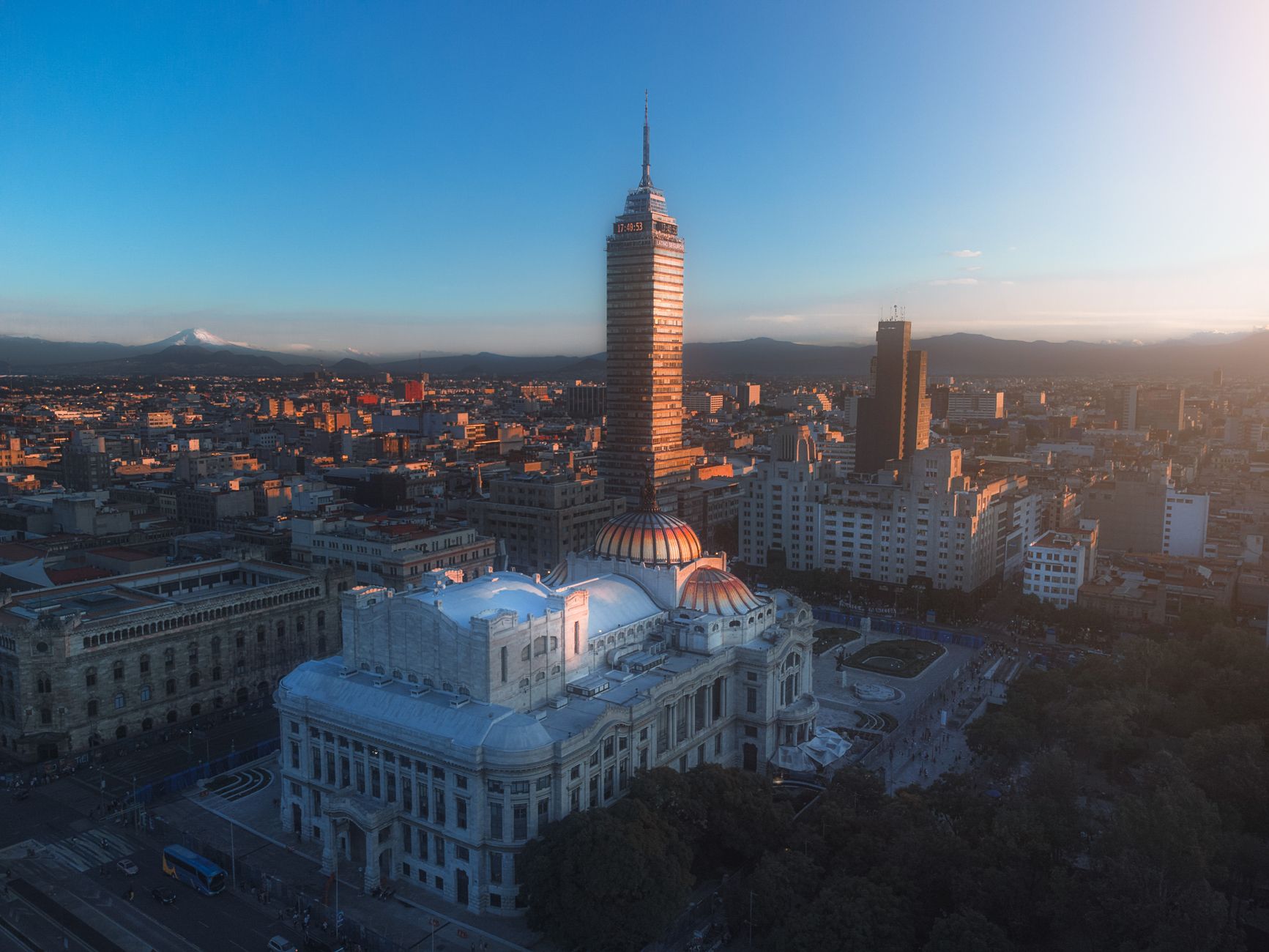
Mexico City is the largest Spanish-speaking city in the world, and for gay men and women considering a Latin American base, it makes a case few cities in the region match. Same-sex marriage has been legal here since 2009 — CDMX moved first, and all 31 states followed by 2022. Zona Rosa, in the Cuauhtémoc borough, has been a recognized gay neighborhood since the 1980s. The scene has since expanded into Roma Norte, Condesa, and Colonia Juárez.
The practical draw is cost. A furnished one-bedroom in Roma or Condesa rents for $700–$1,000/month. Coffee and breakfast run $4–6. A coworking desk costs $150–$200. Dollar and euro earners stretch budgets that would feel tight in Lisbon or Madrid, and the city’s food culture — markets, taquerias, restaurant-dense neighborhoods — means eating well without cooking every meal.
The trade-off is safety. CDMX has real crime, concentrated in specific districts rather than distributed evenly across the city. Roma, Condesa, Polanco, and Juárez carry meaningfully different risk profiles from the outer colonias. Petty theft is the most common problem; violent crime affecting foreigners is less frequent but not theoretical. Moving here works well if you’re comfortable adjusting daily habits to the risk environment.
Neighborhoods
Zona Rosa is the historic gay district — a walkable cluster of gay bars, clubs, and LGBTQ+-owned businesses between Paseo de la Reforma and Insurgentes. It’s more commercially oriented and tourist-facing than Roma or Condesa; gentrification has shifted the mix over the past decade, but the concentration of queer-specific venues remains the highest in the city. A furnished one-bedroom runs $800–$1,200/month.
Roma Norte is where most mid-range expats actually land. Tree-lined streets, café density high enough to work from, markets, a Saturday farmers market on Álvaro Obregón. The neighborhood runs queer-adjacent — several gay-run venues and LGBTQ+ residents throughout — without being explicitly a gay district. One-bedrooms run $700–$1,100.
Condesa sits adjacent to Roma, slightly quieter and with larger parks. The streets around Parque México have a strong café and brunch culture. Pricing is comparable to Roma.
Colonia Juárez is immediately north of Zona Rosa and has become one of the more interesting neighborhoods in central CDMX — walkable, strong nightlife (gay and mixed), the Mercado Juárez, and rents that remain reasonable: $600–$950 for a one-bedroom.
Polanco is the upscale alternative — the city’s wealthiest residential area, best international restaurants, higher security, meaningfully higher rents. Not the standard remote-worker choice, but worth knowing if budget is less of a constraint.
Best time to move/visit
Moving: February through April, or September through November. Mexico City sits at 2,240 meters elevation, which keeps temperatures moderate (15–25°C year-round) but concentrates air pollution in winter months. The rainy season runs June through September — intense but short afternoon downpours that clear quickly.
Visiting: March–May for the best weather window — warm, dry, good light. June brings rain but also Pride month, one of the largest in Latin America.
Pride: Mexico City Pride (Marcha del Orgullo LGBT+) runs the last Saturday of June. Over 300,000 people march along Paseo de la Reforma to the Zócalo. The preceding week fills Zona Rosa, Roma, and Condesa with events. The scale reflects the city’s genuine legal and political commitment to LGBTQ+ rights rather than just tolerance.
Safety and acceptance
Mexico City requires calibration, not alarm. Roma, Condesa, Juárez, and Polanco have meaningfully lower crime rates than the outer colonias. Standard practices apply: use Uber rather than street taxis, don’t display phones or laptops on busy streets, stay aware of your surroundings late at night.
Gay-specific violence in the central neighborhoods is not a routine concern. Zona Rosa operates as an openly gay space around the clock. Roma and Condesa are broadly liberal and accepting of queer couples. Anti-gay harassment in these areas is uncommon, though not impossible.
The honest country-level context: Mexico has one of the highest recorded rates of anti-LGBTQ violence in Latin America. That violence is concentrated outside CDMX, in more conservative states. The city’s political and social culture is genuinely different from much of the country — but this is a country-level reality worth knowing before you conflate CDMX with Mexico broadly.
Legal status
Cost of living
Mexico City is one of the most affordable major cities in the Americas for dollar-earning remote workers. The numbers below reflect a realistic mid-range setup in Roma or Condesa — furnished apartment, coworking desk, eating out regularly.
| Expense | USD / mo |
|---|---|
| Rent — 1BR apartment, furnished, central (Roma / Condesa / Juárez) | $850 |
| Groceries | $180 |
| Eating out (3–4×/week, local restaurants and taquerias) | $200 |
| Coworking space (monthly membership) | $160 |
| Transport (Metro + Uber) | $80 |
| Utilities + internet (often included in furnished rentals) | $60 |
| Health insurance (local private or international) | $120 |
| Phone SIM + data | $20 |
| Entertainment, leisure, nightlife | $230 |
| Total | $1,900 |
Rent varies dramatically by neighborhood. An unfurnished one-bedroom in Roma runs $600–$900/month; furnished with AC in Polanco can reach $1,800+. Most expats land in the $700–$1,100 range in Roma, Condesa, or Juárez. Numbeo Mexico City data, June 2026.
Community and dating
The gay scene in CDMX is active, diverse, and concentrated enough to navigate without much effort.
Zona Rosa is the anchor. The streets around Génova and Amberes have the highest density of gay-specific venues in the city. El Almacén (Florencia Street), a Zona Rosa fixture since 1996 with rotating shows depending on the night, remains one of the longest-running gay bars. The Cabaré-Tito group operates three sister venues in the same area: El Taller (Florencia 37a) is the flagship basement bar, running nightly drag and travestí shows for nearly four decades; Fusión (Londres 77) is the show-and-spectacle room; Punto y Aparte (Amberes 61) is the everyday bar with a rooftop terrace. The clubs around Génova and Amberes run from midnight until 6am on weekends, Thursday through Sunday in many cases. The scene outside Zona Rosa has grown — venues in Colonia Juárez and Roma Norte expand the options for people who find Zona Rosa too tourist-heavy. Venues change; check current listings through apps, local LGBTQ guides, and socials before going.
Community spaces: The Comunidad de LGBTTTIQA+ runs community resources and events. For the English-speaking expat layer, the Internations Mexico City chapter and the Mexico City LGBTQ+ Expats Facebook group are accessible entry points.
Dating apps: Grindr, Scruff, and Hornet all have large CDMX userbases. You’re pulling from a metro area of 9 million people; user density in Roma and Condesa is high enough that apps work well on a block-by-block basis.
Settling in — life as a gay expat
The first 90 days are easier in CDMX than in most cities of comparable size. The 180-day tourist entry means you have time to look around before committing to anything legally or financially. Housing for expats tends to be furnished and month-to-month — Airbnb works for initial weeks; then Homie, Lamudi, and Facebook groups (“CDMX Expat Housing”) take over for anything longer. Most landlords in Roma and Condesa are used to foreign tenants and don’t require Mexican credit history. Same-sex couples encounter no practical problems renting in the central colonias.
Spanish is the working language, and Mexico City’s pace of social life rewards having at least functional Spanish faster than many expat-dense cities do. The gay scene in Zona Rosa runs in Spanish; getting past the surface layer into actual friendships with local Mexicans requires more than bar-level vocabulary. The English-speaking expat bubble (heavy on American and Canadian remote workers) is large enough to function inside indefinitely, but you’ll find the social ceiling low if you stay there.
The gay expat community in CDMX is younger and more transient than in Lisbon or Buenos Aires. Most people are on rolling tourist stays rather than committed long-term residency, which creates a churning social landscape. Friends you make in the first three months may not be there in six. Building real community takes time and repeated presence at the same venues and spaces.
As a couple, CDMX is comfortable in the central neighborhoods. Hand-holding in Zona Rosa is unremarkable; in Roma and Condesa it draws no attention. At dinner at 10pm in Condesa — which is when Mexicans eat dinner — you’ll be one of several same-sex couples in the room without occasion.
Work culture for out LGBTQ+ expats varies sharply by sector. The tech and creative industries in Roma and Condesa that attract remote workers operate openly. Mexican corporate culture outside that bubble is more conservative, though CDMX is significantly more liberal than the country’s other major cities.
The hard parts: altitude affects some people (2,240 meters — give yourself a week to adjust if you’re coming from sea level), the safety calibration takes mental energy to maintain, and building genuine community below the expat surface requires Spanish and consistency.
Work and connectivity
Mexico City’s remote work infrastructure has improved substantially since 2020. Fibre broadband is available in most central furnished apartments, typically 100–300 Mbps. Telcel and AT&T Mexico offer solid LTE coverage in central colonias.
Coworking: Homework Condesa (Tamaulipas Street) is the most established expat-facing option. CENTRO EMES in Roma and Selina CDMX draw the remote worker crowd. Industrious and WeWork have CDMX locations in Polanco and Santa Fe. Day passes run $10–20; monthly hot-desks $120–$200.
Cafes: Café density in Roma and Condesa is high. Third-wave independents throughout both neighborhoods are laptop-friendly in the mornings, wifi is standard, and Mexicans working from cafes for long sessions is entirely normal.
For Mexico and Latin America travel: eSIM 7G covers 150+ countries and keeps your original number live for bank 2FA — use code 524JQTTA for 15% off.
Visa and how to move
Short stays: US, Canada, EU, UK, and Australia passport holders enter Mexico visa-free for up to 180 days on a Forma Migratoria Múltiple (FMM). That’s a meaningful window — many people spend their entire initial stay on tourist entry.
Residente Temporal (long-stay path): Mexico’s Temporary Resident Visa is the standard pathway for remote workers beyond 180 days. Apply at a Mexican consulate before entry. Requirements as of 2026:
- Monthly income of roughly MXN $27,400 ($1,350 USD) for the past 6 months, OR savings/investments of approximately MXN $548,000 ($27,000 USD)
- Thresholds are updated periodically by the INM — confirm current figures at gob.mx/inm
- Clean criminal record
- Valid passport with at least 6 months remaining
The visa is valid for 1 year, renewable annually up to 4 years. After 4 years you can apply for Residente Permanente. Mexico does not label this a “digital nomad visa” but it functions as one — working remotely for foreign clients does not require a work permit.
Taxes: Mexico taxes Mexican-source income. If you work for foreign clients and employers, you are not generating Mexican-source income and are not subject to Mexican income tax as a temporary resident. You remain tax-resident in your home country unless you formally establish Mexican tax residency. Get local legal advice if you plan to stay beyond a year.
Bank account and finances: Opening a Mexican bank account as a temporary resident (BBVA or Santander Mexico) is possible but bureaucratically slow. Most expats use a foreign account plus Wise for peso transfers: open a Wise account for free.
Finding accommodation: Airbnb for the first weeks; Homie, Lamudi, and Facebook groups (“CDMX Expat Housing,” “Mexico City Foreigners”) for longer-term furnished rentals. Most landlords prefer month-to-month contracts for expats. Listed prices in pesos are often negotiable.