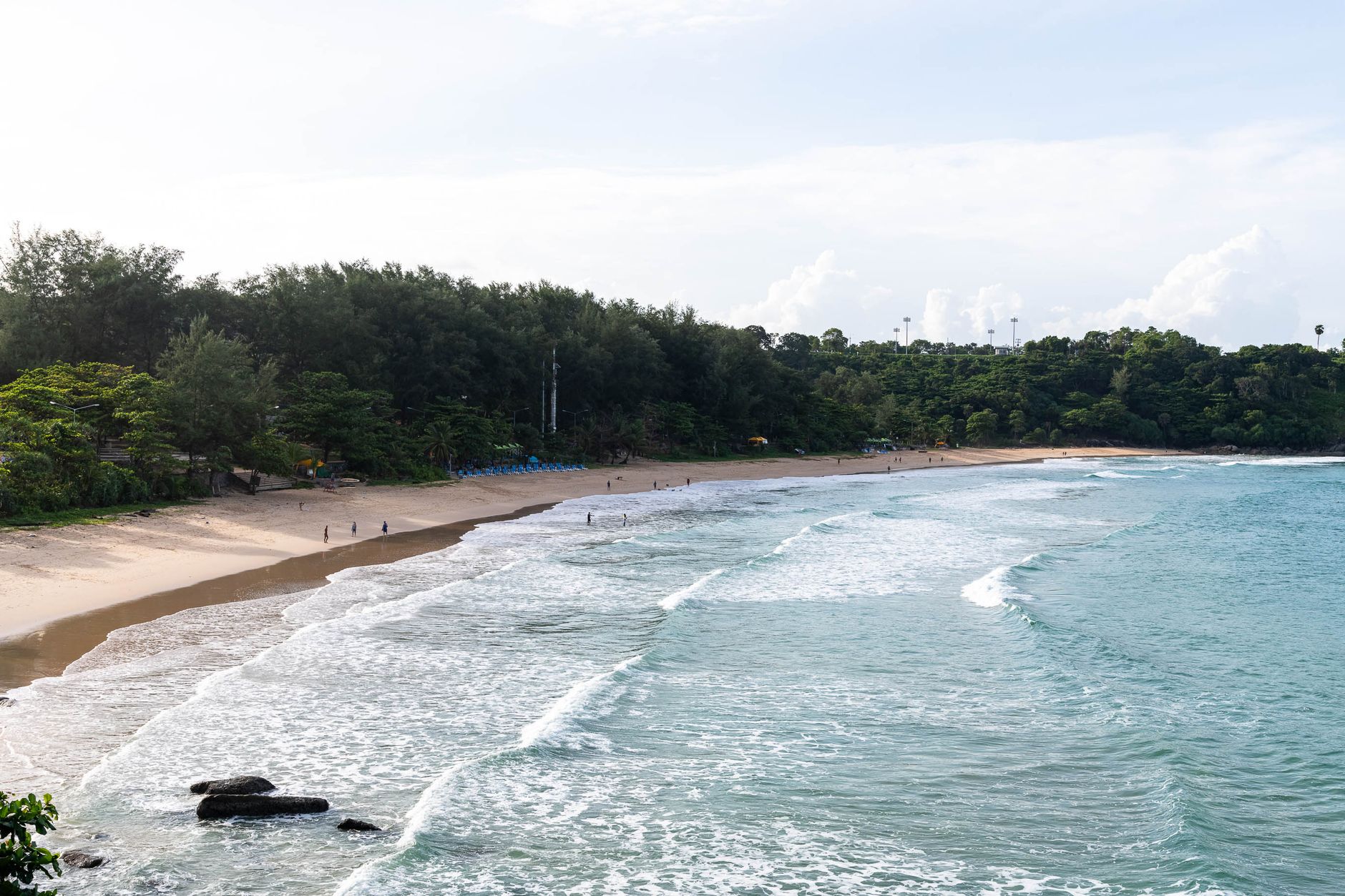
Why move here
Thailand made same-sex marriage legal on 23 January 2025 — the first country in Southeast Asia to do so, the second in Asia after Taiwan. For gay nomads choosing between Thailand’s main bases, Phuket sits at a particular intersection: it’s a resort island with a long-running gay scene, genuinely cheap living costs, and the kind of beach-and-pool lifestyle that attracts people who want their nomad setup to look as good as it works.
Phuket is not for everyone. The island runs on tourism, which shapes the geography, the economy, and the social dynamics. It doesn’t have the urban energy of Bangkok or Chiang Mai’s slower creative pace. What it offers instead is a combination of things that are hard to find together: sea views, low cost, fast enough internet for remote work, and a gay community concentrated in Patong’s Paradise Complex that has operated for decades.
The honest cost: you live on a tourist island, and some of the island’s habits — traffic on the single road running through Patong, the transience of the scene, the difficulty of building anything beyond the expat and long-term-visitor bubble — are real trade-offs. People who thrive here typically choose it deliberately rather than landing by default.
Neighborhoods
Patong is where most of the nightlife and the gay scene concentrates. Paradise Complex, on Rat-U-Thit Road, is the island’s gay hub — a strip of gay bars, clubs, and cabarets that runs from early evening into the early morning hours. Living in Patong means proximity to everything, more noise, and the highest density of tourist infrastructure. One-bedroom condos near the beach run THB 15,000–30,000/month ($450–900).
Kata and Karon are quieter beach areas about 15–20 minutes south of Patong. More residential, popular with long-stay expats and families, lower noise level. The trade-off is distance from the gay scene — you need a scooter or car. Rents are slightly lower than Patong proper.
Rawai and Nai Harn on the southern tip are the most residential parts of the island. Popular with expats who want supermarkets, local restaurants, and a long-term community feeling. Quietest and most local. The commute to Patong’s nightlife is 20–30 minutes on a scooter — fine if you’re going deliberately, but not a walkable situation.
Phuket Town (the provincial capital) is the most authentically Thai part of the island. It has Sino-Portuguese architecture, local markets, good cheap food, and notably lower rents. The gay scene is in Patong, not here, but the town has its own queer-friendly cafes and spaces. Good base if you prioritize local integration over beach proximity.
Cherngtalay and Laguna on the northwest coast are the most upscale area, with branded resorts, villas, and the Bang Tao beach scene. Higher costs, quieter, and more isolated from both the gay scene and the general nomad community.
Best time to move/visit
Moving: November through February is the best stretch. The southwest monsoon has ended, humidity drops, and the island runs at its most pleasant. This is also peak season for short-term rental prices, so negotiate for monthly rates before the high-season surge.
Visiting: November to April gives you reliable dry weather and calm seas. May through October is monsoon season — heavy rain most afternoons, some beaches close, and parts of the west coast become choppy. The island doesn’t shut down during monsoon (the east coast stays calmer), and long-term costs drop significantly, but it’s worth knowing what you’re signing up for.
Pride: Phuket does not have a standalone Pride event of comparable scale to Bangkok or Taipei. Bangkok Pride, held in June, is the nearest major event and a common trip for Phuket-based expats. Patong’s gay scene runs year-round, with seasonal variation in crowd size that peaks November–March.
Safety and acceptance
Physical safety in Phuket is generally fine in the main tourist and expat areas. Petty theft — phone snatching on scooters, bag-grab near the beach — is the primary concern. Violent crime against foreigners is uncommon but not unknown; the Patong bar scene late at night requires the same common sense as any beach resort with heavy alcohol tourism.
For gay travelers and residents specifically, the Patong/Paradise Complex area is openly gay and has been for years. Within that zone, acceptance is commercial but genuine — you’re welcome, your money is welcome, and the scene is well-established. Outside Patong and the expat-heavy neighborhoods, public displays of affection as a same-sex couple attract more attention than they would in Bangkok or Taipei. Thai culture tends toward discretion in public regardless of orientation; what reads as acceptance is often cultural indirectness rather than active affirmation.
Thai attitudes toward LGBTQ+ people are generally more tolerant than the legal framework previously indicated. The 2025 marriage equality law had broad legislative support (130–4 in the Senate). Social stigma varies by generation and location; urban and tourism-industry Thais are typically unfazed, while conservative family and community contexts operate differently.
Anti-discrimination protections in employment and services are not codified in Thai law. The legal progress on marriage has not yet been accompanied by comprehensive anti-discrimination legislation.
Legal status
Cost of living
Phuket is more expensive than Thailand’s mainland cities but still significantly cheaper than comparable beach/resort destinations in Europe or the Americas. The numbers below are based on a mid-range Patong or Kata setup with monthly rent, coworking on occasion, and a mix of local and expat-restaurant eating.
| Expense | USD / mo |
|---|---|
| Rent — 1BR condo, Patong or Kata (monthly rate) | $650 |
| Groceries (local markets + Lotus's / Makro) | $200 |
| Eating out (4–5×/week, mix of local Thai and mid-range expat restaurants) | $250 |
| Coworking space (monthly membership) | $140 |
| Scooter rental (monthly) | $110 |
| Utilities + internet (often partially included in condo fee) | $100 |
| Health insurance (private; required for DTV) | $130 |
| Phone SIM + data (DTAC or AIS monthly plan) | $20 |
| Entertainment, leisure, nightlife | $100 |
| Total | $1,700 |
Street food and local Thai restaurants run THB 50–120 ($1.50–3.50) per meal. The cost curve bends sharply upward if you live on the beachfront, eat at tourist-facing restaurants, and drink at Patong’s bars nightly. Numbeo Phuket data, June 2026.
Community and dating
Paradise Complex in Patong is the gay scene’s physical anchor. The strip in front of the Royal Paradise Hotel on Rat-U-Thit Road runs bars, clubs, and cabarets that operate nightly from around 9 pm until 2–4 am. Cabaret shows — drag, go-go, performance — run at multiple venues, including TANGMO (a club with professional nightly shows at 10:30 pm, 11:30 pm, and 1 am). i Bar and Zag Bar are among the established fixture venues in the complex; as of 2026, both operating. The scene is commercial and entertainment-focused — expect cabaret, shows, and an international tourist crowd — rather than the resident-neighborhood feel of Gazi in Athens or Ximen in Taipei. That’s not a criticism; it’s what the island runs on.
Outside Paradise Complex, the wider Phuket expat community is social but scattered across the island. There is no single queer community hub beyond Patong. Facebook groups and apps are the connective tissue.
Dating apps: Grindr, Scruff, and Hornet all have active userbases in Phuket, concentrated in Patong and tourist-heavy areas. Jack’d and Blued have a Thai-language user base. Coverage thins in southern and eastern parts of the island.
Scene note: Phuket’s gay scene is driven significantly by visitors and short-stay tourists. Finding people who have been on the island for months rather than weeks requires some intent. Long-term residents tend to be older, and the nomad-age cohort is thinner here than in Bangkok or Chiang Mai. Venues and scene composition shift with the season.
Venues change fast; check current listings on apps, travel guides, and venue socials before planning around specific spots.
Settling in — life as a gay expat
Landing in Phuket is logistically simple compared to most cities in this guide. The DTV visa process runs through the Thai e-Visa portal (thaievisa.go.th), requires proof of a THB 500,000 bank balance, and takes 7–15 business days to process. You can arrive, get a local SIM at the airport (AIS or DTAC, both good), and be operational on the same day.
Finding accommodation is similarly frictionless for short-term stays. Monthly condo rentals are widely available through Facebook groups (“Phuket Expats,” “Phuket Condos for Rent”), Airbnb for monthly rates, and local agencies. The challenge is finding long-term housing with consistent internet quality — always test the connection before signing anything beyond a month.
As a same-sex couple, Phuket’s tourist-economy context works in your favor within the expat and tourist areas. Landlords in Patong and Kata are accustomed to renting to foreign couples of all configurations; discrimination in practice is uncommon. Public affection within Paradise Complex and the beach areas is unremarkable. Elsewhere on the island, discretion matches what you’d apply in any Thai social context.
Making friends requires going beyond Patong’s transient bar scene. The long-term expat community (concentrated in Rawai, Chalong, and Cherngtalay) has its own gravity through sports clubs, diving communities, and regular gatherings. The gay long-term expat cohort is smaller and tends to socialize through a mix of apps and venue regulars. Expect to cycle through a lot of people who are there for a month before finding those who are staying.
Work culture in the DTV context means you’re working remotely for foreign clients — local employment is not permitted. The nomad community here is lighter than in Bangkok or Chiang Mai; the coworking scene exists but is not deep. If serious work infrastructure matters to your daily rhythm, Phuket requires more active searching than a city built around nomad density.
What people underestimate: the island’s geography. Without a scooter, Phuket is awkward. The roads connecting Patong, Kata, Rawai, and Phuket Town are not walkable between neighborhoods, and ride-share (Grab) works but gets expensive if you’re doing multiple trips daily. Budget the scooter from day one.
Work and connectivity
Internet quality in Phuket has improved markedly but remains variable by location. Condos in Patong and Kata with dedicated fiber connections run 100–200 Mbps reliably. Older buildings or properties far from Patong can drop to spotty connections — test before committing. Mobile coverage from AIS and DTAC is generally strong across the main tourist corridors and weaker in the rural east.
Coworking: CAMP (associated with Maya Mall chain), Mango Cowork, and several smaller spaces in Kathu and Patong operate with monthly memberships from THB 3,000–8,000 ($85–240). The coworking ecosystem is thinner than Bangkok or Chiang Mai — not every space has reliable enough speeds for video calls. Day passes at most locations run THB 300–500 ($9–15).
Cafes: A coffee-shop working culture exists in Phuket Town and in the upscale Cherngtalay area more than in Patong, which skews toward tourist-facing spots with limited outlets. Phuket Town’s old district has a cluster of specialty cafes that work well for daytime sessions.
For mobile coverage when island-hopping or traveling the region, an eSIM with Southeast Asia coverage beats swapping SIMs at each border: eSIM 7G covers 150+ countries and keeps your original number live for bank 2FA — use code 524JQTTA for 15% off.
Visa and how to move
Short stays: Citizens of the US, UK, EU, Canada, Australia, and most countries can enter Thailand visa-free for 60 days. A single in-country extension of 30 days is available at any immigration office. That’s 90 days to test the island before committing to a longer-stay visa.
Thailand DTV (Destination Thailand Visa): Launched July 2024, the DTV is Thailand’s digital nomad visa.
- 5-year multiple-entry visa with 180-day stays per entry (renewable in-country at any immigration office)
- Required: bank balance of THB 500,000 (~$15,000 USD) sustained over 3 months
- No minimum monthly income requirement — savings only
- Applicants must work remotely for non-Thai employers or clients; no Thai employment permitted
- Application fee: THB 10,000 (~$300)
- Apply online at thaievisa.go.th or through a Thai embassy/consulate
- Eligible activity includes remote work, cultural activities, or educational programs of at least 6 months
Banking and finances: Opening a Thai bank account as a DTV holder requires a local address and multiple visits in some cases; it’s not always straightforward. Bangkok Bank and Kasikorn Bank (KBank) are the most foreigner-friendly. For the period before a local account is set up — and for international transfers generally — a Wise account saves significantly on fees: open a Wise account for free.
Finding accommodation: Facebook groups (“Phuket Expats Housing,” “Phuket Monthly Rentals”) move fastest for furnished short-to-medium stays. Longer-term leases (6+ months) come through local agents.