Why move here
Porto is what Lisbon was about eight years ago: genuinely affordable, compact enough to navigate on foot, and gradually accumulating the international crowd and coworking infrastructure that follows good quality of life rather than hype. It shares Portugal’s excellent legal framework — same-sex marriage, full adoption rights, anti-discrimination law — without Lisbon’s premium price tag.
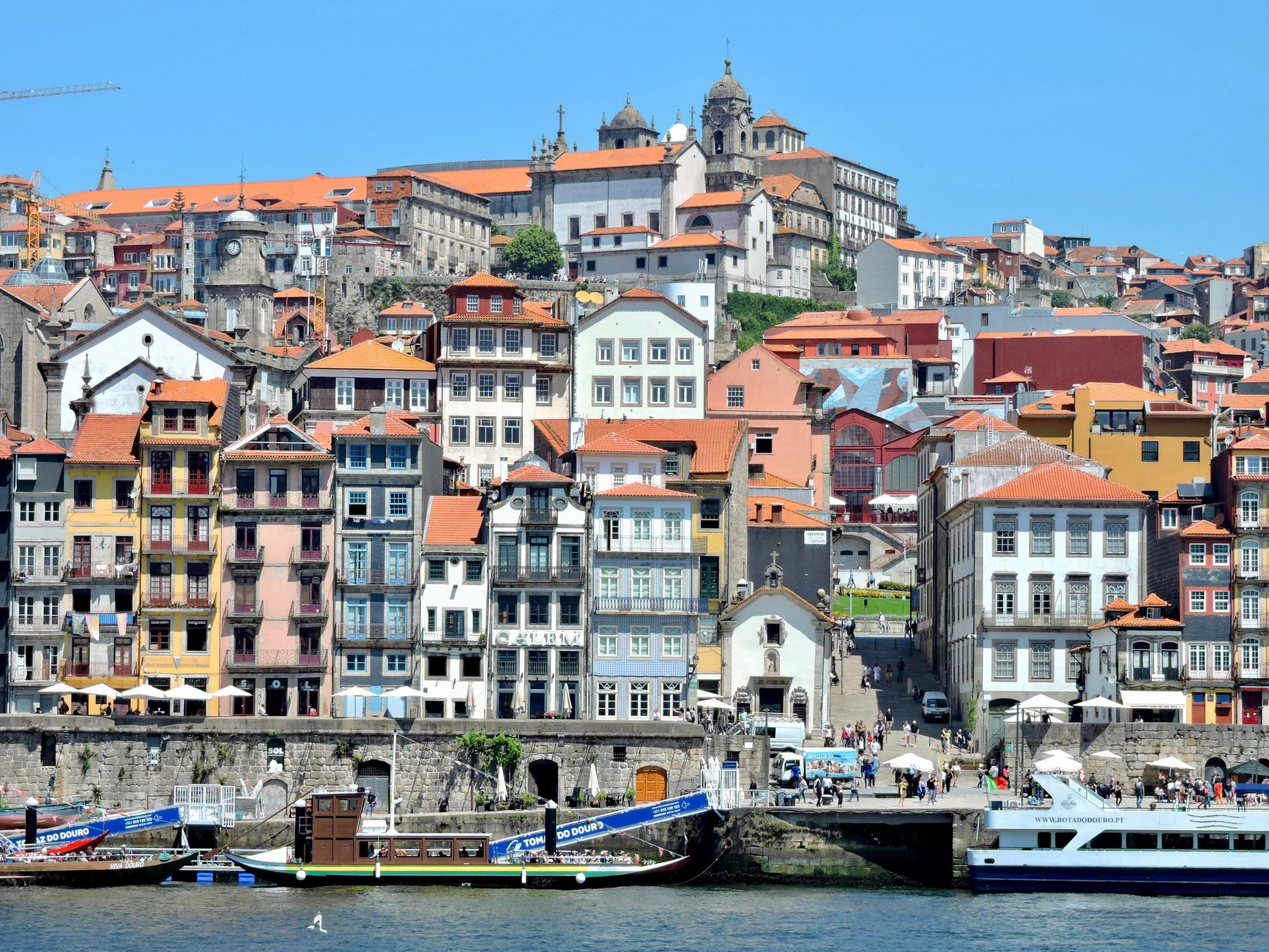
The city runs along the Douro river gorge. Neighborhoods spill down steep hills to the waterfront, wine cellars crowd the southern bank at Vila Nova de Gaia, and the whole thing is visually extraordinary in a way that keeps surprising you even after months of living there. The port wine is cheap and excellent. The food is honest: a bifana sandwich at a counter café costs €3 and the seafood in the Matosinhos market neighborhood is some of the best in Iberia.
One thing to say clearly upfront: Porto’s gay scene is smaller than Lisbon’s. The bars and community spaces are genuine, but you’re not getting Príncipe Real density. What you get instead is a city where being gay is so unremarkable that it barely warrants its own geography — the Bonfim neighborhood and the Baixa are welcoming as a matter of course.
Neighborhoods
Bonfim is the neighborhood that travel guides have started calling Porto’s gayborhood, and the label is loosely accurate. The streets east of Batalha square — particularly around Rua de Antero de Quental and Rua de Sá da Bandeira — hold the highest concentration of LGBTQ+ bars and venues. It’s also where younger creatives and recent arrivals rent apartments. Expect to pay €900–€1,200 for a one-bedroom; many options are renovated floor-throughs in 19th-century buildings with azulejo tile facades.
Cedofeita runs immediately west of Bonfim and has the best independent coffee shops, galleries, and bookstores. It’s walkable to the gay scene in Bonfim and has a slightly calmer residential feel — a good base if you’re working from cafes during the day and walking to bars at night.
Baixa and Aliados (downtown) is more commercial and touristy but has excellent transit connections and is central to everything. Zoom, Porto’s main gay nightclub, operates in this zone within walking distance of the metro at Aliados.
Ribeira along the riverside is beautiful but tourist-saturated in summer and expensive for medium-term rentals. Better for a week than for three months.
Matosinhos, northwest on the coast, is where locals go for seafood and beach runs. Rents are lower, connectivity is fine (Metro line connecting directly to downtown), and it’s quieter. Worth considering if you’re a long-term resident rather than a new arrival.
Best time to move/visit
Moving: September and October are the sweet spot. Summer tourist demand has cleared, apartment inventory is up, and the weather is still warm enough that you’re not arriving into Atlantic grey. Spring (March–April) is the second-best window.
Visiting: May through September gives you reliable weather. July and August are busy but less overwhelmingly so than Lisbon — Porto has fewer short-break visitors and more people who come to stay a while. The northern light in late June is striking.
Pride: Porto Pride 2026 runs September 11–13, with the parade on Saturday September 12. It’s smaller and more community-rooted than Lisbon’s — not a corporate spectacle, which many people find more appealing. Arraial Porto Pride complements it with parties and cultural events across Bonfim venues.
Safety and acceptance
Porto is a safe city by any European standard. Violent crime is rare; petty theft is the main issue around the main train station (São Bento) and in busy tourist areas like Ribeira. Away from tourist flashpoints, day-to-day safety is not something you’ll think about.
Acceptance is high and matter-of-fact rather than performative. Porto’s large university population — two major universities drawing students from across Portugal and Brazil — creates an environment where queer visibility is genuinely unremarkable. The Bonfim and Cedofeita neighborhoods are openly welcoming; the outer residential districts are quieter about it but not hostile.
The practical caveat: Porto is more provincial than Lisbon. You notice this mainly in the absence of a large gay expat community — you’re more likely to be meeting local Portuguese and Brazilian residents than a broad international mix.
Legal status
Cost of living
Porto is noticeably cheaper than Lisbon — around 15–20% across most categories. Rents are lower, restaurants are cheaper, and the overall monthly number for a mid-range nomad lifestyle comes in around $2,200. That’s a meaningful difference if you’re comparing it to Lisbon ($2,800) and a dramatic one if you’re comparing to Amsterdam.
| Expense | USD / mo |
|---|---|
| Rent — 1BR apartment, central (Bonfim / Cedofeita) | $1,100 |
| Groceries | $270 |
| Eating out (3–4×/week, local restaurants) | $230 |
| Coworking space (monthly membership) | $140 |
| Transport (Metro pass + occasional Uber/Bolt) | $70 |
| Utilities + internet | $90 |
| Health insurance (SafetyWing or private) | $120 |
| Phone SIM + data | $15 |
| Entertainment, leisure, nightlife | $165 |
| Total | $2,200 |
A one-bedroom in Bonfim currently runs €900–€1,100 ($990–$1,210). The same apartment in Ribeira or the tourist-facing Baixa can run 30–40% more for what you’re getting. Numbeo Porto data, June 2026.
Community and dating
The scene in Porto is smaller but genuine. The concentration of venues in Bonfim and around Aliados means you’ll see the same faces regularly — which, depending on your perspective, is either a community or a fishbowl. Most people arriving from larger gay scenes find it refreshing for a while.
Bars and clubs: Zoom (Rua de Passos Manuel 40, near Aliados) is Porto’s main gay nightclub — drag shows, themed party nights, and gogos in a former warehouse space, open Fridays and Saturdays from 12:30 am to 6 am. Café Lusitano (Rua de José Falcão 137) is the cocktail bar option: more dressed-up crowd, drag shows, open Wednesdays, Fridays, and Saturdays. The Bonfim bar strip gets going after 11 pm. Venues change fast — check current listings on apps, local LGBTQ guides, and venue socials before you go.
Community events: Porto Pride is community-organized rather than corporate-sponsored, which gives it a different energy. The ILGA Portugal Porto chapter runs events and resources throughout the year.
Dating apps: Grindr and Scruff both have active userbases in Porto, though smaller than Lisbon. The app mix skews toward local Portuguese and Brazilian users rather than international nomads — useful context for your first few weeks.
Settling in — life as a gay expat
The first 90 days have more friction than people expect. Start with a NIF (tax identification number) — it’s the unlock for everything else: bank account, lease, mobile contract. You can get one at a local tax office without being a resident, or pay a lawyer or gestor around €100–150 to do it remotely. Housing moves fast: good apartments in Bonfim and Cedofeita go within days, usually through the Facebook group “Porto Expats Housing” and Idealista rather than formal agencies. Renting as a same-sex couple is a non-issue legally, but the landlord pool in Porto is smaller and more weighted toward individual private landlords than in Lisbon — some are conservative, and you’ll encounter more friction than the law would suggest. The practical approach is to lead with financial stability rather than identity.
Porto’s expat bubble is smaller than Lisbon’s, and the queer community is more Portuguese-dominant. Language matters here in a way it doesn’t in central Lisbon. The university crowd — Universidade do Porto and Universidade Católica between them bring tens of thousands of students — is genuinely welcoming to queer newcomers, and showing up to events, bars, and Pride-adjacent gatherings consistently is how most people break out of early isolation.
Dating beyond hookups reflects the city’s scale: Porto is a “know everyone” city. That can feel like community or claustrophobia, depending on the week. The app dating pool is thinner than Lisbon’s, and the dating pool generally is smaller. Relationships do form — but the ceiling arrives faster.
As a couple, hand-holding in Bonfim and Cedofeita is fine and unremarkable. Baixa and Ribeira are neutral. The outer residential areas read more conservative, though incidents are rare.
Remote workers fit well into Porto’s expat-bubble work culture — out-at-work norms are strong within it. The tech and startup scene here, while smaller than Lisbon’s, runs on expat-bubble norms. Local traditional industries are less consistent; if you’re working for a Portuguese company rather than remotely, the reception depends heavily on the team.
The hard part most people don’t say clearly: Porto’s scene is small enough that you hit its ceiling quickly. People who thrive here tend to go slow, embed into Portuguese social life, and stop comparing it to where they came from. People who need Lisbon-level scene density leave within six months.
Work and connectivity
Porto’s remote work infrastructure has improved significantly since 2022. Fibre broadband is standard in central apartments; coworking spaces have opened in Bonfim and Cedofeita. The city is smaller than Lisbon, so you’ll exhaust the coworking options faster, but the main ones are solid.
Coworking: LACS Porto (Rua do Almada), Second Home Porto, and Coworklisboa Porto (confusingly named, genuinely in Porto) are the well-reviewed options. Day passes run €12–18; monthly hot-desks start around €120–€150. Betterfly and Cobase are good for flexible one-week arrangements.
Cafes: Cedofeita has the best concentration of laptop-friendly cafes — try Colossus Coffee, Blissful Cafe, or the various specialty spots on Rua de Cedofeita. The culture is less paranoid about laptops than some southern European cities.
For European travel connectivity from Porto, an eSIM covering multiple countries saves the constant SIM-swapping: eSIM 7G covers 150+ countries and keeps your original number live for bank 2FA — use code 524JQTTA for 15% off.
Visa and how to move
Short stays: EU, UK, US, Canadian, Australian and most Western passport holders enter Portugal visa-free for up to 90 days within any 180-day Schengen period. Porto makes an excellent base for a 90-day scouting trip — long enough to evaluate neighborhoods and set up a bank account.
D8 Digital Nomad Visa: Portugal’s D8 applies country-wide, including Porto. As of early 2026, the requirements are:
- Monthly income of at least €3,680 — this is pegged to 4× the Portuguese national minimum wage (€920/month from January 2026). The minimum wage rises most years, so the income threshold tracks upward with it; always verify the current figure before you apply rather than relying on a fixed number.
- Savings of roughly €11,040 (12× the threshold) for a single applicant
- Proof of remote employment or freelance contracts
- Accommodation in Portugal (a short-term lease works)
- Clean criminal record
- Health insurance valid in Portugal
- Application submitted at a Portuguese consulate before entry
Processing takes 2–4 months. After two years on the D8, you can apply for a long-term residency permit; after five years, you’re eligible for Portuguese citizenship and an EU passport.
Finding accommodation: Idealista and Uniplaces are the main platforms. Porto has a Facebook group (“Porto Expats Housing”) that moves fast. Budget 2–3 weeks of active search for a good apartment at a fair price in Bonfim or Cedofeita.
For currency conversion during the move setup, Wise will save you substantial fees: open a Wise account for free.