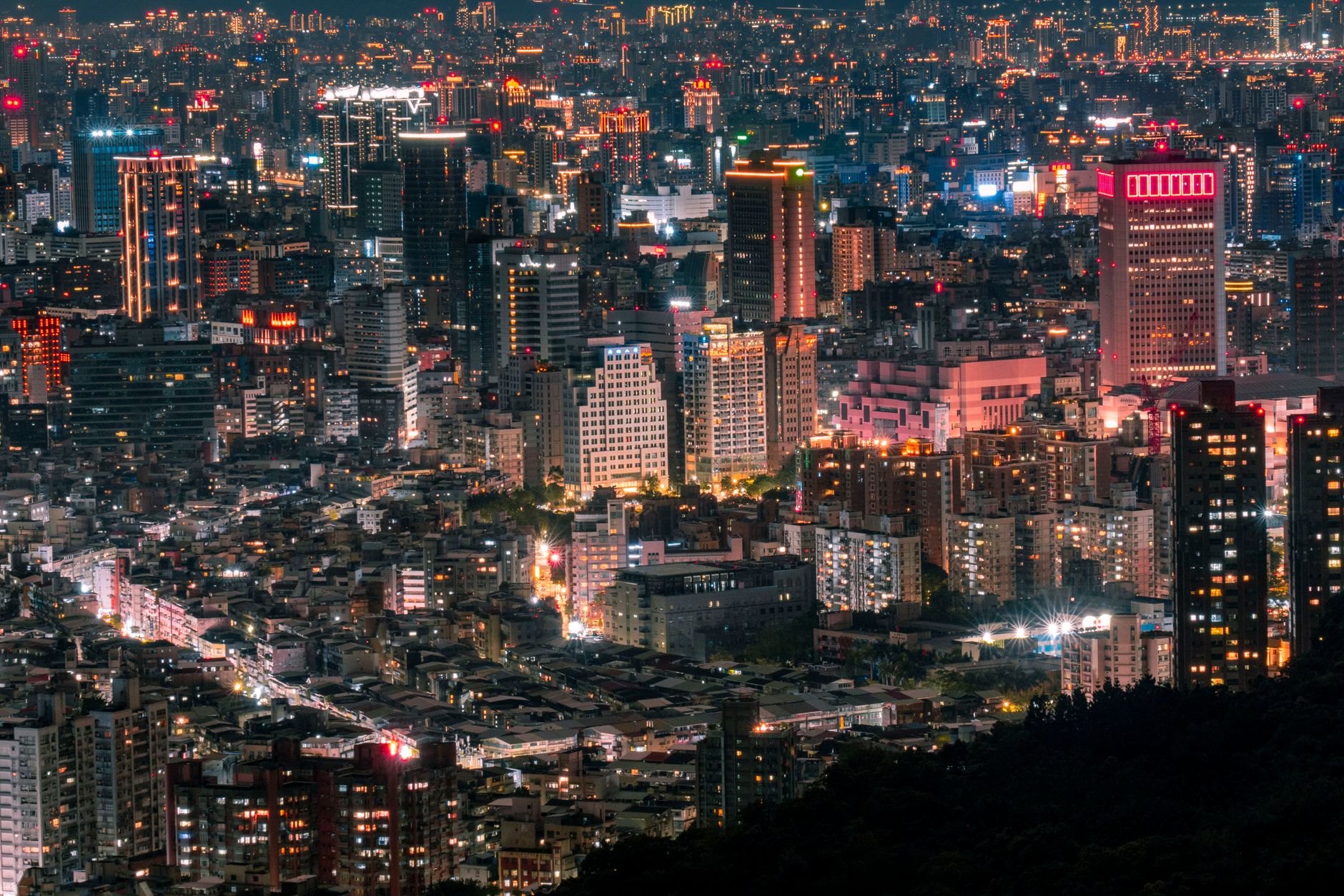
Why move here
Taiwan legalized same-sex marriage in May 2019 — the first country in Asia to do so — and Taipei has built on that foundation in ways that distinguish it from every other city on this continent. The joint adoption rights that followed in 2023, the active Pride scene (the largest in Asia by attendance), and a mainstream culture that has shifted measurably toward acceptance all make Taipei an outlier in a region where legal progress remains slow or absent.
The city earns its nomad reputation on infrastructure. Public transit is excellent and cheap. Food costs almost nothing if you eat at the night markets and local restaurants. Healthcare, available to Gold Card holders after six months, is among the best-value systems in the world. Internet speeds are consistently fast. And the city is physically safe — violent crime is rare, and street harassment is uncommon across the board.
Cost is the calibration question. A realistic mid-range nomad setup in a central apartment with occasional coworking runs around $1,800/month. That’s cheaper than most European cities but not as cheap as Chiang Mai or Bangkok. The Gold Card visa requires $50,000/year income, which puts it out of reach for some nomads — though the newer Digital Nomad Visitor Visa (DNVV), introduced in January 2025, sets the bar at $40,000/year (or $20,000 for those under 30).
Neighborhoods
Ximen (Ximending) is Taipei’s LGBTQ+ anchor. The district around the Red House — a colonial-era octagonal market building that became a gay cultural space in the early 2000s — hosts the highest concentration of gay bars and queer-friendly venues in the city. Ximen is also a general youth-culture district, so it’s never exclusively gay, which keeps it accessible and relatively low-key on weekdays. Rents here are moderate: a one-bedroom runs NT$18,000–28,000 ($560–870/month).
Da’an is where many foreign professionals and Gold Card holders land. It has good Japanese restaurants, excellent coffee shops, proximity to NTU and the international schools, and calm residential streets. The gay scene is a short MRT ride away. Rents are slightly higher: NT$22,000–35,000 ($680–1,090/month) for a one-bedroom.
Zhongzheng and Zhongshan are central, more business-oriented, and offer mid-range rents with easy MRT access to everywhere. Zhongshan in particular has a growing cafe and coworking density that suits remote workers.
Yonghe and Zhonghe across the river offer significantly lower rents for people willing to trade 15–20 minutes of MRT commute. Functionally the same city, just quieter.
Best time to move/visit
Moving: March through May is the window. The brutal July–September typhoon and humidity season has passed, and you’re arriving before the year-end holiday rush. October and November also work well — the weather is cooler and livable, and short-term rental inventory is good.
Visiting: October to December is the most comfortable for visitors. Spring (March–April) is warm but manages the humidity better than summer. July and August are hot, humid, and typhoon-prone — workable but not ideal if you’re evaluating the city seriously.
Pride: Taiwan Pride, held annually in Taipei in late October, is the largest in Asia and one of the biggest on the continent. Taiwan Pride 2026 runs October 29–31, with the main parade on Saturday, October 31. The event draws 200,000+ participants and has a genuine political edge alongside the celebration — the ongoing work to extend equal rights beyond the 2019 marriage law keeps it grounded.
Safety and acceptance
Taipei is one of the safest major cities in Asia for gay travelers and residents. Violent crime is rare; street harassment directed at LGBTQ+ people is uncommon. Ximen is an openly gay neighborhood without the tension you’d feel in comparable districts in cities where acceptance is more fragile.
Day-to-day acceptance in Taipei is genuine at a cultural level. A 2026 survey found that 54% of Taiwanese support same-sex marriage, up 12 points since 2019. Younger generations and urban populations skew higher. You can hold hands in most central neighborhoods without incident; the occasional older resident may be uncomfortable, but confrontational reactions are rare.
Outside Taipei, the picture changes. Rural Taiwan is more conservative, and smaller cities operate differently. If you’re based in Taipei, this is mostly irrelevant — but it shapes the picture for same-sex couples who travel around the island.
One practical note: Taiwan’s proximity to China creates geopolitical uncertainty that most residents factor into long-term planning. It’s a background condition rather than a day-to-day stressor, but if stability is a hard requirement, it’s worth being clear-eyed about.
Legal status
Cost of living
Taipei is affordable by the standards of most cities nomads compare it to — considerably cheaper than Tokyo, Singapore, or Seoul, and on par with or below most European cities at a comparable quality of life. The main driver of the mid-range budget below is a central apartment; eat local and skip coworking and you can comfortably live on $1,200–1,300/month.
| Expense | USD / mo |
|---|---|
| Rent — 1BR apartment, central (Da'an / Zhongzheng / Ximen) | $780 |
| Groceries | $200 |
| Eating out (4–5×/week, night markets and local restaurants) | $220 |
| Coworking space (monthly membership) | $150 |
| Transport (MRT monthly pass + occasional taxi) | $55 |
| Utilities + internet (fibre usually included in rent) | $80 |
| Health insurance (private; NHI available after 6 months on Gold Card) | $110 |
| Phone SIM + data | $25 |
| Entertainment, leisure, nightlife | $180 |
| Total | $1,800 |
Night market food — 60–90 NT$ ($2–3) for a full meal — is not a budget trick; it’s genuinely what a large portion of the population eats regularly. Numbeo Taipei data, June 2026.
Community and dating
Ximen anchors Taipei’s queer scene. The area around the Red House has 25+ gay bars, shops, and community spaces concentrated in and around the octagonal building. The bars spill onto the surrounding streets from early evening, and on weekends the square outside the Red House becomes an outdoor terrace. The Secret Garden, Paradise, and Café Dalida are long-running venues in this cluster — as of 2026, all still operating — but the scene is dynamic; check current listings on local LGBTQ apps and event pages before planning around specific spots.
Beyond bars, Taipei has a deeper queer infrastructure than most Asian cities. Taiwan Pride (pride.tw) organizes year-round events beyond the October parade. The Taiwan LGBT Family Rights Advocacy group, the Taiwan Tongzhi Hotline Association, and other NGOs run support services, legal clinics, and social events in Mandarin and English.
Dating apps: Grindr, Scruff, and Hornet are all active in Taipei. Hornet has a strong local Taiwanese user base. Jack’d and Blued (popular across Asia) also have a presence. Location-based search in Ximen and Da’an returns active results throughout the week.
Social mix: Taipei draws a significant number of gay expats — from Japan, South Korea, Southeast Asia, North America, and Europe — but the core scene is Taiwanese. Some Mandarin helps socially, though the expat-facing parts of Ximen are navigable in English.
Venues change fast; check current listings on apps, local LGBTQ guides, and socials.
Settling in — life as a gay expat
The first 90 days in Taipei move faster than most Asian cities. Setting up a local bank account as a Gold Card holder takes about a week with the right documents; the Card itself functions as proof of legal status. Getting an ARC (Alien Resident Certificate) follows shortly after. SIM cards from Chunghwa Telecom or Taiwan Mobile are available same-day at any major station. The bureaucratic experience is light by the standards of the region.
Renting as a same-sex couple is legally protected and mostly unremarkable in practice. In Ximen and Da’an, landlords are experienced with foreign renters. Apartments are listed on 591.com.tw (the main local platform, somewhat navigable without Mandarin) and in expat Facebook groups. A furnished one-bedroom in Da’an runs NT$22,000–30,000 ($680–930/month).
Making friends takes deliberate effort, as it does in any city, but the infrastructure helps. The expat community in Taipei is well-organized — international chapters, regular meetups, coworking-based social events. The queer expat community is smaller than in Lisbon or Berlin but is active around Pride planning, the Tongzhi Hotline volunteer network, and specific venues in Ximen. Mandarin beyond basic phrases unlocks the local social world meaningfully.
Dating beyond apps is city-dependent. Taipei supports longer-term relationships — there’s a large population of gay men and women who have settled here, including many who moved from elsewhere in Asia. The social world isn’t purely transient, though the Gold Card cohort turns over regularly. For couples, day-to-day Taipei is comfortable: hand-holding in Ximen, Da’an, and most central areas goes unremarked.
The major work-culture note: if you’re employed remotely for a non-Taiwanese company, out-at-work norms in your virtual office apply. Local Taiwanese company culture is more variable — tech and creative sectors in Taipei are broadly fine, while more traditional industries can still be conservative. The Gold Card community operates in a fairly open expat bubble regardless.
The hardest part for most newcomers: Mandarin. Taipei is functional in English in the places foreigners concentrate, but breaking into local social life — or navigating anything off the main routes — without Mandarin requires persistent effort. People who invest in even basic language ability find the city opens significantly.
Work and connectivity
Taiwan has some of the fastest internet infrastructure in the world. Fibre speeds of 500 Mbps–1 Gbps are standard in most central apartments, usually included in the rent. Mobile coverage from Chunghwa Telecom, FarEasTone, and Taiwan Mobile is excellent across the city and in the MRT system.
Coworking: WeWork (several locations), The Hive Taipei (Da’an), and a dense network of independent coworking spaces across Zhongshan and Da’an. Monthly memberships run NT$4,500–9,000 ($140–280). Many cafes operate as de facto coworking spaces and are laptop-friendly well into the afternoon; most have strong wifi and outlets at every table.
Cafes: Taipei has an extraordinary coffee culture — specialty cafes are densely packed, prices are low ($1.50–3 per coffee), and working from a cafe is socially normal and practical. Finding a good spot is rarely a problem.
For mobile connectivity when traveling in the region, an eSIM with Asia Pacific coverage is cleaner than juggling local SIMs: eSIM 7G covers 150+ countries and keeps your original number live for bank 2FA — use code 524JQTTA for 15% off.
Visa and how to move
Short stays: Citizens of the US, UK, Canada, Australia, most of Europe, and many other countries can enter Taiwan visa-free for 90 days. Japanese and South Korean nationals get up to 90 days. This is enough time to scout the city, test apartments, and decide whether to apply for a longer-stay visa.
Taiwan Employment Gold Card: The Gold Card is Taiwan’s flagship long-stay visa for skilled professionals. It provides open work authorization — you can work for any employer, freelance, or operate your own business — without employer sponsorship.
- Minimum income: $50,000 USD/year from employment or freelancing in your professional field (or demonstrated expertise through publications, awards, or professional recognition)
- Duration: 1, 2, or 3 years — applicant chooses; renewable
- Apply entirely online at goldcard.nat.gov.tw
- NHI eligibility after 6 months in Taiwan
- Tax benefit: foreign income above NT$3 million (~$96,000) receives a 50% exemption for the first 3 years
Taiwan Digital Nomad Visitor Visa (DNVV): Launched January 2025, updated January 2026.
- For nationals from visa-exempt countries
- Minimum income: $40,000 USD/year ($20,000 for those aged 20–29)
- Bank balance: average $10,000 USD/month over prior 6 months
- Initial 6-month stay, extendable up to 3 times for a maximum of 2 years
- Cannot work for Taiwanese employers; cannot enroll in NHI
Banking and finances: Gold Card holders can open a bank account within the first few weeks of arrival. CTBC Bank and Cathay United Bank are the most straightforward for English-speaking foreigners. For international transfers before a local account is set up, Wise saves considerably on exchange fees: open a Wise account for free.
Finding accommodation: 591.com.tw is the main listing platform and benefits from Google Translate. Facebook expat groups (“Taipei Expats,” “Housing in Taipei”) are active and faster-moving for furnished apartments.